
Every great leader reaches a crossroads — a moment when experience alone is no longer enough. The decisions grow heavier, the teams grow larger, and the pressure to perform never eases. This is precisely where Pedro Paulo Executive Coaching becomes not just valuable, but essential. It is a structured, deeply personalized leadership development journey that equips executives, managers, and entrepreneurs with the clarity, vision, and inner strength to lead with lasting impact.
Unlike generic training programs, this coaching model works from the inside out. It transforms not only how leaders perform — but how they think, communicate, and carry themselves under pressure. If you have ever wondered what separates truly exceptional leaders from merely competent ones, the answer almost always begins with deliberate, guided self-development.
see also: 310+ Happy New Month, My Love | Messages, Prayers & Letters
What Is Pedro Paulo Executive Coaching?
Pedro Paulo Executive Coaching is a results-oriented, individualized leadership development process that helps professionals bridge the gap between where they currently are and where they have the potential to be. It is not a motivational seminar. It is not a one-size-fits-all workshop. It is a focused, ongoing partnership designed to produce measurable, sustainable change.
At its core, this coaching approach combines strategic leadership development with emotional intelligence training. Leaders do not simply receive advice — they are guided through a process of self-discovery, behavioral reflection, and practical application that reshapes how they operate in high-stakes professional environments.
The coaching addresses the full spectrum of leadership challenges: decision-making under uncertainty, team engagement, conflict resolution, communication effectiveness, and executive presence. Each session is customized to the individual’s specific goals, blind spots, and professional context, ensuring that every conversation produces real, actionable insight.
What makes this model distinctive is its long-term orientation. Rather than delivering quick fixes, Pedro Paulo Executive Coaching builds a foundation for continuous growth — the kind that compounds over time and elevates both the leader and the organization they serve.
The Core Philosophy: Leadership Begins Within

The philosophical foundation of Pedro Paulo Executive Coaching rests on a single, powerful truth: sustainable leadership transformation begins with internal clarity, not external strategy.
Most leadership development programs focus on what leaders do. This coaching model goes deeper — it focuses on how leaders think. It challenges the belief that authority alone creates influence, and instead positions authentic leadership as the product of self-awareness, emotional intelligence, and value-aligned action.
Self-Awareness as the Starting Point
Many leaders carry behavioral patterns formed under early-career pressure — patterns that once served them but now limit their effectiveness. Coaching creates a structured mirror, allowing leaders to observe their own habits, communication tendencies, and emotional reactions with greater honesty and precision. This awareness is the foundation for all growth.
Intentional Action Over Reactive Behavior
One of the most powerful mindset shifts coaching produces is the movement from reaction to intention. Leaders who respond thoughtfully rather than impulsively build stronger relationships, make clearer decisions, and earn deeper trust from their teams. Coaching trains this capacity through consistent practice and real-world application.
Alignment Between Values and Leadership Behavior
When a leader’s daily actions are disconnected from their core values, it creates internal tension that others can sense. Coaching helps leaders identify this misalignment and recalibrate — producing leadership that feels not only effective, but authentic. Authentic leadership inspires loyalty, engagement, and organizational resilience.
This philosophy transforms leadership from a job title into a purposeful, evolving identity — one that grows stronger with every challenge faced.
Why Modern Leaders Seek Executive Coaching
The professional landscape has changed dramatically. Leaders today are expected to navigate digital transformation, manage diverse and often remote teams, respond to global market pressures, and maintain peak performance — all simultaneously. The cognitive and emotional load is immense.
Pedro Paulo Executive Coaching addresses a critical gap that technical expertise cannot fill: the capacity to lead with clarity, consistency, and composure regardless of external conditions.
The Pressures That Drive Leaders to Coaching
Many executives seek coaching not because they are failing, but because they are succeeding and want to keep growing. Others seek it during periods of transition — stepping into a new leadership role, scaling a business, or navigating organizational complexity. Some come because they have hit a plateau they cannot break through alone.
Common triggers include difficulty delegating effectively, communication breakdowns within leadership teams, decision fatigue, loss of motivation, conflict with stakeholders, and the quiet but persistent feeling that something important is being overlooked. Coaching provides the structured space and expert guidance needed to address each of these challenges with precision.
Beyond Skill — The Question of Sustainability
Most leaders do not lack skill. They lack sustainable systems — for managing energy, making decisions, processing setbacks, and maintaining long-term vision. Executive coaching builds these internal systems, enabling leaders to perform consistently at high levels without burning out or losing perspective.
In a world that demands constant adaptation, coaching is the investment that makes every other leadership investment more effective.
see also: Heartfelt Prayers and Blessings for a New Job Start
Key Benefits of Pedro Paulo Executive Coaching
The impact of this coaching approach is both broad and deep, touching every dimension of professional performance and personal effectiveness.
Sharper, More Confident Decision-Making
Leaders develop a clear decision-making framework that integrates both analytical thinking and intuitive judgment. They learn to move through uncertainty without paralysis, make bold choices without recklessness, and trust their judgment even when data is incomplete.
Elevated Communication and Influence
Coaching refines how leaders express ideas, deliver feedback, handle difficult conversations, and inspire action in others. Leaders learn to communicate with precision and presence — ensuring their message lands with the intended impact and builds rather than erodes trust.
Advanced Emotional Intelligence
Understanding and managing one’s own emotions, while accurately reading the emotional dynamics of others, is the defining capability of exceptional leaders. Coaching develops this intelligence through targeted reflection and behavioral practice, resulting in leaders who create psychologically safe, high-performing team environments.
Stronger Executive Presence
Executive presence is the combination of confidence, clarity, and composure that makes others want to follow. Coaching builds this presence deliberately, helping leaders show up consistently as the most effective version of themselves — in boardrooms, team meetings, and one-on-one conversations alike.
Improved Work-Life Integration
Leadership sustainability requires balance. Coaching helps leaders establish clear priorities, set effective boundaries, and protect the personal energy that fuels their professional performance. The result is not just a more effective executive — but a healthier, more fulfilled human being.
Organizational Ripple Effects
The benefits of coaching do not stop with the individual leader. When leaders communicate more clearly, decide more confidently, and manage conflict more skillfully, their entire organization benefits. Coaching creates a cascading effect of improved culture, stronger team performance, and more resilient organizational structures.
The Role of Self-Awareness in Executive Growth
Self-awareness is the most underestimated — and most consequential — leadership capability. Leaders who understand themselves lead better. It is that straightforward.
Pedro Paulo Executive Coaching places self-awareness at the center of every developmental journey. Through structured reflection, honest feedback, and behavioral observation, leaders gain precise insight into how they are currently showing up — and how they could show up more effectively.
Recognizing Unconscious Patterns
Many leadership habits are invisible to the leader themselves. A tendency to interrupt during meetings, a pattern of avoiding difficult conversations, a habit of micromanaging under pressure — these behaviors often operate below conscious awareness, yet they shape team culture and organizational outcomes daily. Coaching brings these patterns into focus and provides a roadmap for change.
Understanding Emotional Triggers
Every leader has situations, personalities, or pressures that tend to provoke reactive behavior. Coaching identifies these triggers and develops the capacity to respond with composure and intention even in the most challenging circumstances. This emotional regulation is not about suppressing feelings — it is about channeling them productively.
Leveraging Core Strengths
Self-awareness is not only about identifying weaknesses. It is equally about recognizing and strategically deploying strengths. Leaders who understand their natural capabilities can build teams and systems that amplify those strengths while compensating for areas of growth — creating organizations that operate at their collective best.
Emotional Intelligence as a Leadership Multiplier

If technical expertise is the entry point to leadership, emotional intelligence is the accelerant that drives exceptional leadership. Pedro Paulo Executive Coaching places tremendous emphasis on developing this capability because its impact on team performance, organizational culture, and leader effectiveness is consistently profound.
The Four Dimensions of Leadership EQ
Self-awareness, self-regulation, social awareness, and relationship management — these four dimensions form the architecture of emotional intelligence in leadership. Coaching develops each systematically, creating leaders who can navigate complex interpersonal dynamics with skill and grace.
A leader who recognizes their own emotional state can regulate it. A leader who can regulate it commands respect. A leader who commands respect builds teams that perform with discretion and dedication. This is the multiplier effect of emotional intelligence — each capability builds on the last.
Empathy as a Strategic Leadership Tool
Empathy is often misunderstood as a soft quality — pleasant but not strategically significant. In reality, empathetic leaders make better decisions because they have access to more complete information. They retain top talent, resolve conflicts faster, and build organizational cultures where people genuinely want to contribute. Coaching develops empathy as a deliberate practice, not merely a personality trait.
Managing Stress Without Compromising Performance
High-pressure environments are the norm in executive leadership. Coaching provides leaders with specific, practical techniques for managing stress in ways that protect both their decision-making capacity and their professional relationships. The ability to remain composed under pressure is one of the most visible and respected leadership qualities — and one that can be developed with the right guidance.
Decision-Making Under Pressure: A Core Coaching Focus
The quality of leadership is ultimately measured by the quality of decisions made. Pedro Paulo Executive Coaching dedicates significant attention to developing leaders who can make sound, confident decisions even in conditions of high pressure, limited information, and significant consequence.
Structured Thinking in Complex Situations
Coaching teaches leaders to approach complex problems through systematic frameworks that reduce cognitive overload and increase analytical precision. Rather than reacting to the loudest or most recent input, coached leaders learn to pause, structure the problem, and evaluate options with disciplined clarity.
Integrating Logic with Instinct
Effective decision-making is neither purely rational nor purely intuitive — it is an integration of both. Leaders who have developed strong self-awareness learn to distinguish between intuition grounded in experience and fear-driven impulse. This distinction is crucial, and coaching trains it through consistent reflection on past decisions and their outcomes.
Learning from Every Decision
Coaching introduces a discipline of post-decision reflection that many leaders overlook in the rush of daily responsibilities. By examining the reasoning behind past decisions — both successful and unsuccessful — leaders build a richer, more calibrated judgment over time. This reflective practice compounds, producing increasingly sophisticated decision-making capability as the coaching journey progresses.
see also: 65+ Heartfelt Muslim Love Quotes to Inspire Your Soul
Communication and Influence: Leading Through Language
Leadership is fundamentally a communicative act. Every decision, every direction, every piece of feedback is transmitted through language — spoken, written, and nonverbal. Pedro Paulo Executive Coaching treats communication development as a core leadership capability, not a supplementary soft skill.
The Precision-Clarity Balance
Many leaders err toward one of two extremes: over-explaining, which dilutes the message and signals uncertainty, or under-communicating, which creates confusion and disengagement. Coaching helps leaders find the precise communication style that conveys confidence, clarity, and direction without overwhelming or alienating their audience.
Active Listening as Leadership Power
The most influential leaders in any organization are often the most attentive listeners. Coaching develops the discipline of active listening — the capacity to absorb, reflect, and respond to what others are genuinely communicating, rather than simply waiting to speak. Leaders who listen actively build teams that communicate openly, surface problems early, and collaborate effectively.
Navigating Conflict with Skill
Conflict is inevitable in high-performance environments. The difference between leaders who manage conflict effectively and those who do not lies almost entirely in communication capability. Coaching provides leaders with specific frameworks and practiced techniques for addressing disagreement, misalignment, and interpersonal tension — turning potential disruptions into productive conversations that strengthen rather than fracture relationships.
Leadership Identity Transformation: The Deepest Level of Change
Perhaps the most profound outcome of Pedro Paulo Executive Coaching is the transformation of leadership identity — the fundamental shift in how a leader understands their own role, purpose, and potential.
Many executives operate from a self-concept formed years earlier, under very different circumstances. As responsibilities grow and challenges evolve, this outdated identity becomes a limitation. A leader who still sees themselves primarily as a technical expert may struggle to delegate effectively. A leader who identifies as a problem-solver may inadvertently prevent their team from developing their own problem-solving capabilities.
Coaching challenges these limiting self-perceptions and replaces them with a more expansive, accurate understanding of what the leader is capable of — and what kind of leader they want to become. This identity shift changes everything: how they delegate, how they communicate, how they respond to failure, and how they inspire others.
The transformation is gradual, grounded in real-world experience and reinforced through structured reflection. Leaders begin to act differently not because they are following new rules, but because they are operating from a fundamentally different understanding of themselves and their role.
The Coaching Process: Structure That Produces Results

Pedro Paulo Executive Coaching follows a structured yet highly adaptive process designed to produce clear, measurable outcomes while remaining responsive to the individual leader’s evolving needs and priorities.
Phase One: Assessment and Clarity
Every coaching journey begins with a comprehensive assessment of the leader’s current strengths, challenges, behavioral patterns, and aspirations. This initial clarity creates an accurate baseline from which all growth is measured and ensures that coaching energy is directed toward the areas of highest impact.
Phase Two: Goal Definition
With clarity established, leaders and coaches collaborate to define specific, meaningful goals — not only externally oriented outcomes like improved team performance or faster promotions, but internal developmental goals like greater composure under pressure, more authentic communication, or stronger confidence in strategic thinking.
Phase Three: Development and Application
The core of the coaching engagement involves regular, structured sessions in which leaders explore challenges, test new approaches, and reflect on real-world outcomes. Coaching tools may include behavioral analysis, scenario-based thinking exercises, structured self-assessment, and targeted skill development practices. Between sessions, leaders apply new behaviors in their actual work environment — the only context in which lasting change truly takes hold.
Phase Four: Integration and Sustainability
The final phase focuses on embedding new capabilities, habits, and perspectives so deeply that they no longer require coaching support to maintain. Leaders develop internal self-coaching practices — the ability to observe their own behavior, recognize developmental opportunities, and course-correct independently. This is the mark of truly successful coaching: a leader who no longer needs external guidance to keep growing.
Real-World Scenarios: Coaching in Action
Scenario: The Newly Promoted Executive
A technically brilliant manager is promoted to lead a cross-functional team for the first time. Despite their expertise, they struggle to earn the trust of peers who are now their direct reports. Coaching helps them develop executive presence, shift from technical authority to relational influence, and build the communication capabilities needed to lead effectively at a higher organizational level.
Scenario: The High Performer Approaching Burnout
A top-performing executive has driven consistently strong results for years — but they are exhausted, increasingly reactive, and beginning to disengage from work that once energized them. Coaching helps them identify the source of their depletion, restructure their priorities, and develop the boundaries and recovery practices needed to perform sustainably without sacrificing their health or effectiveness.
Scenario: The Entrepreneur Scaling Their Business
A founder who built a successful startup through hands-on leadership finds themselves overwhelmed as the business grows. Coaching helps them evolve from operator to strategic leader — developing the delegation skills, systems thinking, and organizational architecture needed to scale effectively without losing the culture that made the business successful.
Each scenario demonstrates a core truth: executive coaching is not remediation. It is acceleration.
Common Misconceptions About Executive Coaching
“Coaching is only for struggling leaders.”
This is among the most persistent and damaging misconceptions. The executives who invest in coaching are often the highest-performing, most self-aware leaders in their organizations — precisely because they understand that growth requires deliberate effort, not just accumulated experience.
“The coach will tell me what to do.”
Executive coaching is not consulting or mentoring. A coach does not provide answers — they provide a structured process through which leaders discover their own answers with greater clarity and confidence. This distinction is critical: self-discovered insights produce lasting behavioral change in ways that externally imposed solutions rarely do.
“I will see results immediately.”
Meaningful leadership transformation takes time. Some insights emerge quickly; others develop gradually through repeated application and reflection. Leaders who approach coaching with realistic expectations and genuine commitment consistently report the most profound and durable outcomes.
“Coaching is a sign of weakness.”
The most decorated athletes, accomplished performers, and respected leaders in every field maintain ongoing coaching relationships precisely because they understand that external perspective and structured feedback are prerequisites for sustained excellence — not admissions of inadequacy.
Who Benefits Most from Pedro Paulo Executive Coaching?
While any leader who is genuinely committed to growth can benefit from executive coaching, certain profiles tend to experience the most transformative outcomes.
Senior executives navigating the transition to greater organizational responsibility find coaching invaluable for developing the broader perspective and interpersonal sophistication their new roles demand. Emerging leaders preparing for their first major leadership challenges benefit from building strong foundations before counterproductive habits become entrenched. Entrepreneurs scaling their businesses use coaching to evolve from founders to CEOs — a transition that requires a fundamental shift in identity and operating style.
The common thread is not role or industry — it is openness. Leaders who approach coaching with genuine curiosity, willingness to be challenged, and commitment to doing the necessary inner work consistently achieve outcomes that exceed their initial expectations.
The Long-Term Organizational Impact of Executive Coaching
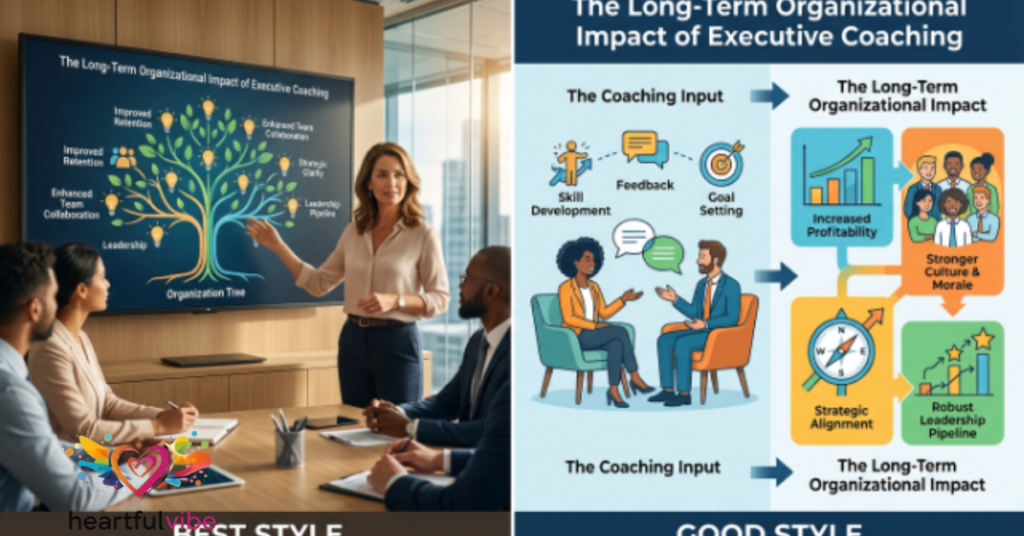
The benefits of Pedro Paulo Executive Coaching extend far beyond the individual leader. When leaders communicate more clearly, decide more confidently, and manage themselves more effectively, the impact radiates throughout their organizations.
Teams led by coached executives demonstrate higher engagement, clearer role clarity, stronger psychological safety, and more consistent performance. Organizational cultures shaped by self-aware, emotionally intelligent leaders attract stronger talent, retain it longer, and generate more innovative thinking.
Over time, the compounding effects of leadership coaching produce organizations that are not only more productive, but more resilient — capable of navigating uncertainty, adapting to change, and sustaining high performance through the inevitable challenges every organization faces.
Practical Leadership Principles You Can Begin Applying Today
The transformation produced by coaching is not confined to formal sessions. Many of the mindset shifts and behavioral practices developed through coaching can be introduced immediately, beginning with small but powerful changes in daily leadership behavior.
Pause before responding. In high-pressure moments, a single breath of intentional delay can mean the difference between a reactive response and a thoughtful one. This simple practice, applied consistently, produces significant improvements in communication quality and relationship strength.
Ask questions before offering answers. The leader who asks the right question often adds more value than the one who delivers the right answer. Curiosity communicates respect, develops team capability, and frequently surfaces better solutions than any individual could generate alone.
Treat feedback as information, not judgment. Leaders who welcome constructive feedback — without defensiveness or justification — grow faster and earn deeper trust than those who resist it. This openness to feedback is the foundation of continuous development.
Align your daily priorities with your deepest goals. The gap between how leaders spend their time and what they say matters most is often enormous. Closing this gap through deliberate prioritization is one of the most impactful and immediately actionable outcomes of executive coaching.
Conclusion
Pedro Paulo Executive Coaching is not a program. It is a partnership — one that meets leaders exactly where they are and guides them, with precision and care, toward the leaders they have the capacity to become.
In a professional world that demands more of leaders every year — more clarity, more composure, more strategic vision, more emotional intelligence — the leaders who invest in their own development gain a lasting competitive advantage that no technology or market condition can eliminate.
The transformation begins with a single commitment: the decision to stop accepting the gap between your current leadership and your potential leadership, and to do the intentional work required to close it.
For leaders who are ready to lead not just effectively, but extraordinarily — Pedro Paulo Executive Coaching provides the structure, the insight, and the partnership to make that transformation real.

I’m Olivia, an AI content writer with 3+ years of experience in creating SEO-optimized and engaging content. I focus on delivering high-quality articles that help websites grow and rank better on search engines.